
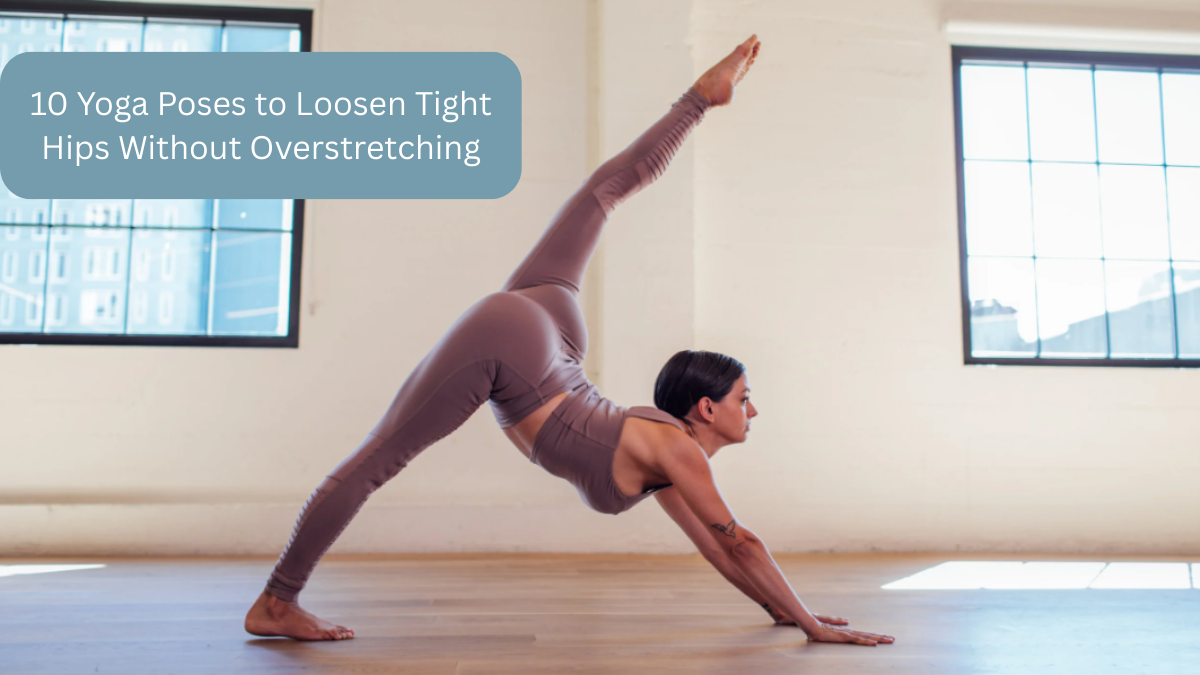
Tight hips are one of the most common physical complaints in modern life. Long hours of sitting, limited movement variety, repetitive exercise patterns, stress, and poor posture all contribute to stiffness in the hip flexors, glutes, groin muscles, and deep stabilizers of the pelvis. Over time, this tightness can lead to discomfort, reduced mobility, lower back pain, knee strain, and restricted movement patterns.
Many people attempt to solve tight hips by aggressively stretching, but overstretching can actually worsen the problem. When muscles are forced beyond their natural range, the body responds with protective tension, inflammation, and sometimes injury. True hip health comes from gentle opening, controlled mobility, and balanced strengthening, not forceful stretching.
Yoga offers a safe, sustainable, and intelligent approach to loosening tight hips without overstretching. The following ten yoga poses are specifically chosen to release tension, improve joint mobility, and restore natural movement patterns while protecting the joints and soft tissues.
Understanding Tight Hips
Tight hips are not always caused by short muscles alone. In many cases, tightness is a result of:
- Muscle weakness leading to compensatory tension
- Poor posture and prolonged sitting
- Nervous system stress and tension holding
- Limited joint mobility
- Imbalanced movement patterns
- Restricted blood flow and circulation
This means that simply pulling on the muscles will not solve the problem. Effective hip mobility work must include:
- Gentle stretching
- Joint movement
- Strengthening of stabilizing muscles
- Controlled breathing
- Nervous system relaxation
The poses below are designed with these principles in mind.
10 Yoga Poses to Loosen Tight Hips Safely
1. Child’s Pose (Balasana)
Child’s Pose gently decompresses the hips and lower spine while releasing tension in the glutes and pelvic muscles.
To practice, kneel on the mat, bring the big toes together, and widen the knees. Sit the hips back toward the heels and extend the arms forward. Rest the forehead on the mat or a cushion. Breathe deeply and allow the hips to soften naturally.

This pose calms the nervous system and creates gentle hip opening without strain.
2. Supine Knee-to-Chest Pose (Apanasana)
This pose relaxes the hip flexors and lower back while improving pelvic mobility.
Lie on your back and draw one knee toward the chest, holding it with both hands. Keep the opposite leg relaxed on the floor. Hold for thirty to sixty seconds and switch sides.
This movement improves circulation and reduces compression in the hip joint.
3. Butterfly Pose (Baddha Konasana)
Butterfly Pose loosens the inner thighs and groin, which play a major role in hip tightness.
Sit upright, bring the soles of the feet together, and allow the knees to fall outward naturally. Keep the spine tall and breathe deeply. Hold for one to two minutes without forcing the knees downward.
This pose improves hip rotation safely.
4. Gentle Figure-Four Pose
This pose releases deep hip tension in the glutes and outer hips.
Lie on your back, bend both knees, and place one ankle over the opposite knee. Gently draw the bottom leg toward your chest. Hold for thirty to sixty seconds per side.
This provides controlled opening without stressing the joint.
5. Low Lunge (Anjaneyasana)
Low lunge gently opens tight hip flexors caused by prolonged sitting.
From a kneeling position, step one foot forward into a lunge. Lower the back knee to the mat and keep the torso upright. Sink the hips forward gently while engaging the core. Hold for one minute per side.
This pose restores natural hip extension.
6. Standing Forward Fold with Soft Knees (Uttanasana Variation)
This pose releases hip tension while protecting the lower back and hamstrings.
Stand tall, hinge forward at the hips, and bend the knees slightly. Let the upper body relax. Hold for one minute.
This decompresses the hips without overstretching.
7. Garland Pose with Support (Malasana Variation)
This deep squat improves hip mobility while maintaining joint safety.
Stand with feet slightly wider than hips, bend the knees, and lower into a squat. Place a block or cushion under the hips for support. Press the elbows into the inner knees to gently open the hips.
This pose restores natural hip function used in daily movement.
8. Cat-Cow Flow (Marjaryasana–Bitilasana)
This flowing movement improves pelvic mobility and hip-spine coordination.
Move between spinal flexion and extension while on hands and knees. Coordinate movement with breath. Continue for one to two minutes.
This promotes fluid movement rather than static stretching.
9. Side-Lying Leg Openers
Lie on one side and gently lift and lower the top leg in controlled movement. This strengthens hip stabilizers while improving mobility.
Perform ten slow repetitions per side.
This prevents overstretching by balancing mobility with strength.
10. Bridge Pose (Setu Bandha Sarvangasana)
Bridge Pose opens the hip flexors while strengthening glutes and core muscles.
Lie on your back with knees bent and feet on the mat. Press into the feet and lift the hips upward. Hold for thirty to sixty seconds.
This pose supports long-term hip stability.
Why These Poses Work Without Overstretching
These poses are effective because they:
- Encourage natural joint movement
- Improve circulation and lubrication in the hip joint
- Relax protective muscle tension
- Strengthen stabilizing muscles
- Restore healthy movement patterns
- Reduce nervous system tension
- Avoid forced range of motion
This approach leads to sustainable mobility rather than temporary flexibility.
Safe Practice Guidelines
Never push into pain.
Move slowly and with control.
Use props for support.
Focus on breathing.
Maintain proper alignment.
Stop if sharp discomfort occurs.
Progress gradually.
Consistency matters more than intensity.
Frequently Asked Questions (FAQ)
What causes tight hips in the first place?
Tight hips are commonly caused by prolonged sitting, lack of movement variety, muscle imbalances, stress, and poor posture.
Is stretching bad for tight hips?
Aggressive stretching can worsen tightness by triggering protective muscle tension. Gentle mobility is more effective.
How often should I practice these poses?
Three to five times per week is ideal. Daily gentle practice brings faster results.
Can yoga help hip pain?
Yes, yoga can improve circulation, reduce muscle tension, and restore joint function when practiced safely.
How long does it take to loosen tight hips?
Most people notice improvement within two to four weeks of consistent practice.
Are these poses safe for beginners?
Yes. All poses can be modified and are beginner-friendly.
Can tight hips affect posture?
Yes. Tight hips often cause pelvic tilt, lower back strain, and postural imbalance.
Should I feel pain during hip opening?
No. Stretching should feel mild and controlled, never sharp or painful.
Is it better to stretch hips in the morning or evening?
Both are beneficial. Morning mobility prepares the body, evening stretching releases tension.
Can yoga prevent hip problems long-term?
Yes. Regular yoga improves joint health, muscle balance, and movement patterns, reducing long-term risk.
Conclusion
Loosening tight hips does not require forceful stretching or painful intensity. True hip mobility comes from gentle, controlled movement, balanced strengthening, mindful breathing, and consistent practice. These ten yoga poses provide a safe, effective, and sustainable way to restore hip health, improve mobility, and prevent future discomfort without overstretching or injury.
By practicing with awareness and patience, you create long-term freedom of movement, better posture, reduced pain, and healthier joints that support your body for years to come.