


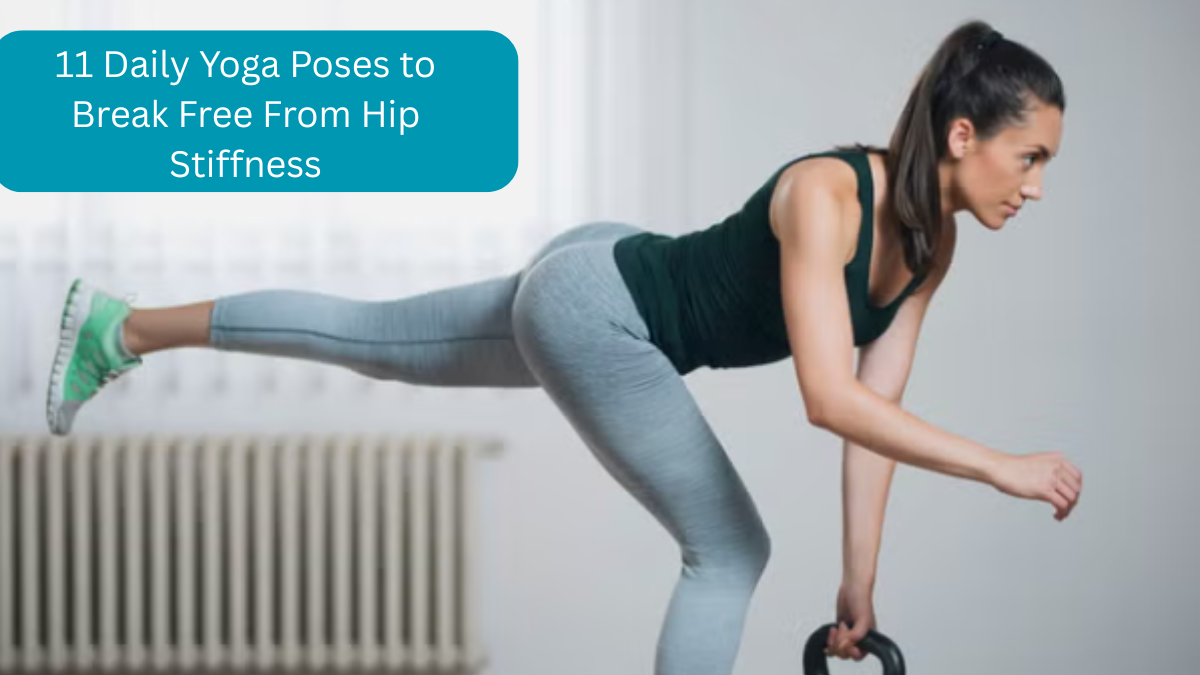
Hip stiffness is one of the most common mobility problems in modern life. Long hours of sitting, limited physical movement, repetitive exercise patterns, poor posture, and stress all contribute to restricted hip mobility. Over time, stiff hips can lead to lower back pain, knee discomfort, poor posture, limited walking ability, reduced athletic performance, and chronic joint discomfort.
The hips are central to almost every movement the body makes. When they become tight and restricted, the entire movement system is affected. Many people attempt to solve this problem through aggressive stretching, but forceful stretching often increases muscle guarding and tension rather than resolving stiffness.

Yoga offers a more effective and sustainable solution. Through gentle movement, controlled strength, joint mobility work, breath regulation, and nervous system relaxation, yoga helps release hip stiffness safely and naturally. Practicing a small set of poses daily can restore hip mobility, improve circulation, and support long-term joint health without strain or injury.
This article presents 11 daily yoga poses specifically chosen to reduce hip stiffness, improve mobility, and restore natural movement patterns in a safe and balanced way.
Why Hip Stiffness Develops
Hip stiffness does not occur only because muscles are tight. It often develops due to:
- Prolonged sitting and sedentary habits
- Weak stabilizing muscles
- Poor posture and pelvic alignment
- Limited joint movement
- Repetitive motion patterns
- Nervous system stress
- Poor circulation
- Lack of mobility-focused exercise
Because stiffness is both muscular and neurological, it cannot be solved by stretching alone. True mobility comes from restoring joint movement, muscular balance, and nervous system relaxation.
Yoga addresses all these factors simultaneously.
11 Daily Yoga Poses for Hip Freedom
1. Cat-Cow Flow (Marjaryasana–Bitilasana)
Cat-Cow improves pelvic mobility and spinal-hip coordination.
Practice on hands and knees, moving slowly between spinal flexion and extension while breathing deeply. Continue for one to two minutes.
This movement restores fluid motion in the hips and pelvis.
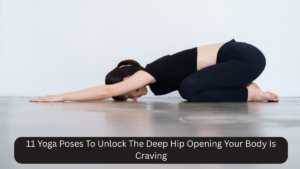
2. Child’s Pose (Balasana)
Child’s Pose gently releases tension in the hips, glutes, and lower back.
Kneel, bring big toes together, widen the knees, sit hips back toward heels, and rest forward. Hold for one to three minutes.
This pose calms the nervous system and relaxes hip muscles.
3. Supine Knee-to-Chest Pose (Apanasana)
This pose decompresses the hip joints and improves pelvic mobility.
Lie on your back and gently draw one knee toward the chest. Hold for thirty to sixty seconds per side.
This releases compression in the hips and lower spine.
4. Butterfly Pose (Baddha Konasana)
Butterfly Pose loosens the inner thighs and groin.
Sit tall, bring soles of the feet together, and allow knees to fall outward naturally. Hold for one to two minutes with relaxed breathing.
This improves hip rotation safely.
5. Low Lunge (Anjaneyasana)
Low lunge opens tight hip flexors caused by sitting.
From kneeling, step one foot forward, lower the back knee, and gently sink hips forward. Hold for one minute per side.
This restores natural hip extension.
6. Gentle Figure-Four Pose
This pose releases deep hip and glute tension.
Lie on your back, cross one ankle over the opposite knee, and gently pull the bottom leg toward the chest. Hold for thirty to sixty seconds per side.
This improves outer hip mobility safely.
7. Garland Pose with Support (Malasana Variation)
A supported deep squat that restores functional hip mobility.
Stand with feet wider than hips, squat down, and place a block or cushion under hips. Press elbows into inner knees. Hold for thirty to sixty seconds.
This improves daily movement patterns.
8. Half Happy Baby (Ardha Ananda Balasana)
A gentle hip opener that improves joint mobility.
Lie on your back, bend one knee, hold the foot or shin, and gently draw the knee downward. Hold for thirty to sixty seconds per side.
This relaxes hip tension without strain.
9. Bridge Pose (Setu Bandha Sarvangasana)
Bridge Pose strengthens glutes and opens hip flexors.
Lie on your back, bend knees, press feet into the mat, and lift hips. Hold for thirty to sixty seconds.
This supports hip stability and posture.
10. Warrior II (Virabhadrasana II)
This pose strengthens hip stabilizers and improves joint alignment.
Stand wide, bend the front knee, extend arms, and hold for thirty to sixty seconds per side.
This builds strength and mobility simultaneously.
11. Side-Lying Leg Openers
Lie on one side and slowly lift and lower the top leg with control. Perform ten slow repetitions per side.
This strengthens hip stabilizers and improves active mobility.
Daily Practice Routine
This daily sequence takes 15–20 minutes:
Cat-Cow Flow
Child’s Pose
Supine Knee-to-Chest
Butterfly Pose
Low Lunge (both sides)
Figure-Four Pose (both sides)
Garland Pose
Half Happy Baby (both sides)
Bridge Pose
Warrior II (both sides)
Side-Lying Leg Openers
Finish with relaxed breathing.
Safety and Practice Guidelines
Move slowly and mindfully
Never force a stretch
Use props for support
Focus on breathing
Stop if sharp pain occurs
Maintain proper alignment
Progress gradually
Practice consistently
Frequently Asked Questions (FAQ)
Why are my hips stiff even though I exercise regularly?
Because many exercises strengthen muscles without improving joint mobility or movement quality. Hip stiffness often requires mobility-specific movement.
How long should I practice daily?
Fifteen to twenty minutes daily is enough for noticeable improvement.
How soon will I feel results?
Most people feel changes within one to two weeks of consistent daily practice.
Is yoga better than stretching for hip stiffness?
Yes. Yoga addresses joint mobility, muscle balance, and nervous system tension, making it more effective than stretching alone.
Can yoga help hip pain?
Yes, when practiced safely, yoga improves circulation, muscle balance, and joint health.
Is this routine safe for beginners?
Yes. All poses can be modified and practiced gently.
Should I feel pain during hip opening?
No. Mild stretching sensation is normal, but sharp pain is not.
Can tight hips affect posture?
Yes. Tight hips often cause pelvic tilt, lower back strain, and postural imbalance.
Can yoga prevent hip stiffness long-term?
Yes. Regular daily practice maintains mobility and joint health.
Is it safe for older adults?
Yes, with proper modifications and support.
Conclusion
Breaking free from hip stiffness does not require forceful stretching or intense workouts. True hip mobility comes from gentle, consistent movement, balanced strengthening, mindful breathing, and nervous system relaxation. These 11 daily yoga poses work together to restore joint mobility, reduce tension, improve posture, and support long-term hip health.
With daily practice, the hips regain natural movement, stiffness decreases, posture improves, and everyday activities become easier and more comfortable. Yoga offers a safe, sustainable, and effective path to lifelong hip mobility and overall physical well-being.