


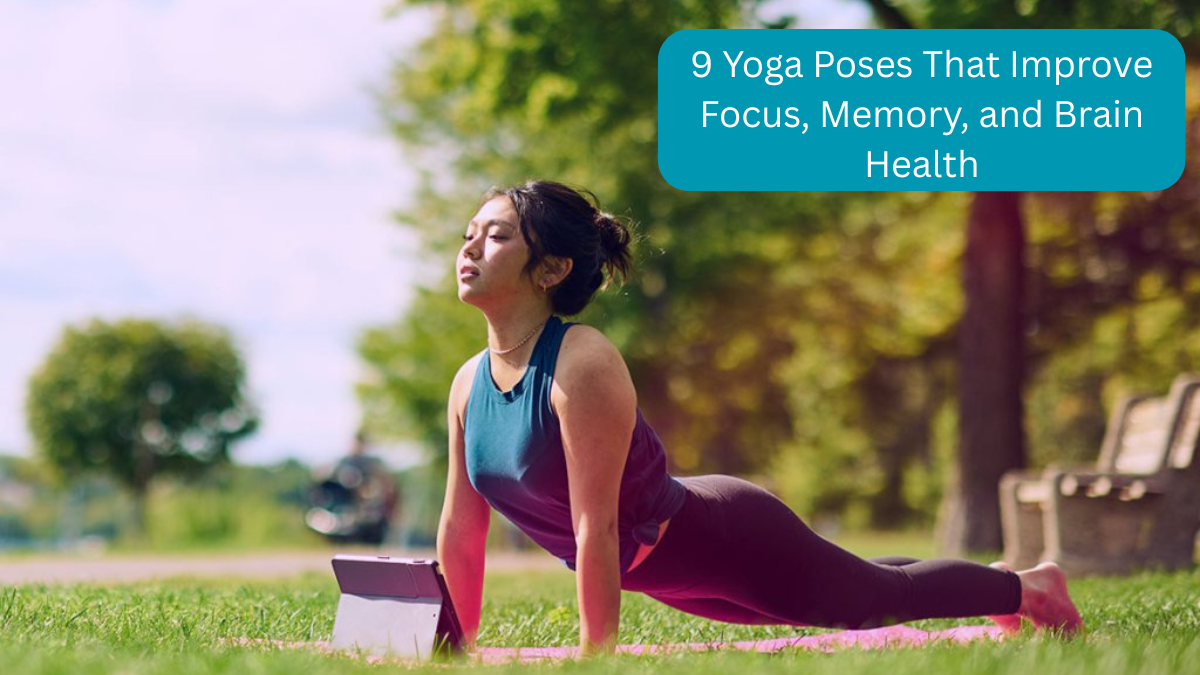
In today’s fast-paced world, mental fatigue, poor concentration, memory lapses, and chronic stress have become common problems. Long screen time, information overload, irregular sleep, sedentary lifestyles, and constant mental stimulation place a heavy burden on the brain. Over time, this can lead to reduced focus, poor memory retention, anxiety, and mental burnout.
Brain health is not only influenced by mental activity but also by physical movement, circulation, breathing patterns, and nervous system balance. The brain depends on oxygen, blood flow, hormonal balance, and neural stimulation to function optimally. When the body is tense, inactive, or stressed, brain performance declines.


Yoga offers a powerful, natural way to support brain health. Through mindful movement, controlled breathing, posture, and nervous system regulation, yoga improves circulation to the brain, reduces stress hormones, enhances oxygen delivery, and strengthens the mind-body connection. Certain yoga poses are especially effective at stimulating mental clarity, improving focus, supporting memory, and promoting long-term brain health.
This article presents nine scientifically supported yoga poses that enhance focus, memory, and cognitive function while supporting emotional balance and nervous system health.
How Yoga Supports Brain Health
Yoga benefits the brain through multiple mechanisms:

Improved blood flow and oxygen delivery to brain tissue
Reduction in cortisol and stress hormones
Improved nervous system regulation
Enhanced parasympathetic (calming) response
Increased body awareness and mindfulness
Improved sleep quality
Better hormonal balance
Reduced mental fatigue
Improved emotional regulation
These physiological effects directly support cognitive performance, memory processing, emotional stability, and mental clarity.
9 Yoga Poses for Focus, Memory, and Brain Health
1. Mountain Pose (Tadasana)
Mountain Pose improves posture, breathing, and mental awareness.

Stand tall with feet grounded, spine straight, shoulders relaxed, and arms at the sides. Close the eyes and focus on slow, deep breathing. Maintain for one to two minutes.
This pose improves oxygen flow, posture, and mental clarity while calming the nervous system.
2. Tree Pose (Vrksasana)
Tree Pose strengthens balance, focus, and mental concentration.
Stand on one leg, place the sole of the opposite foot on the inner calf or thigh, and bring hands to the chest or overhead. Fix the gaze on a single point and breathe steadily. Hold for thirty to sixty seconds per side.
This pose improves focus, coordination, and mind-body connection.
3. Downward-Facing Dog (Adho Mukha Svanasana)
This pose increases blood circulation to the brain and improves nervous system function.
From hands and knees, lift hips upward to form an inverted V shape. Keep the spine long and breathe deeply. Hold for one minute.
This posture improves circulation, mental alertness, and cognitive function.
4. Child’s Pose (Balasana)
Child’s Pose calms the mind and reduces mental fatigue.
Kneel, bring big toes together, widen knees, and sit hips back toward heels. Rest forward with arms extended. Breathe deeply for one to two minutes.
This pose activates the parasympathetic nervous system and reduces mental stress.
5. Seated Forward Fold (Paschimottanasana)
This pose calms the nervous system and improves brain circulation.
Sit with legs extended, hinge forward at the hips, and fold gently over the legs. Keep the spine long and breathe slowly. Hold for one to two minutes.
This posture supports relaxation and mental clarity.
6. Bridge Pose (Setu Bandha Sarvangasana)
Bridge Pose improves blood flow, reduces anxiety, and supports brain function.
Lie on your back with knees bent and feet on the mat. Press into the feet and lift hips upward. Hold for thirty to sixty seconds.
This pose stimulates circulation and nervous system balance.
7. Legs-Up-the-Wall Pose (Viparita Karani)
This restorative pose improves circulation to the brain and calms the nervous system.
Lie on your back and place legs vertically against a wall. Relax arms at the sides and breathe deeply. Hold for three to five minutes.
This pose improves mental clarity and reduces stress.
8. Easy Seated Meditation Pose (Sukhasana with Breath Awareness)
This pose enhances concentration and mental stillness.
Sit comfortably with legs crossed, spine upright, and hands resting on knees. Focus on slow, rhythmic breathing for three to five minutes.
This practice improves focus, memory, and emotional regulation.
9. Corpse Pose with Mindfulness (Savasana)
Savasana allows deep mental integration and nervous system recovery.
Lie flat on your back, close the eyes, and relax the entire body. Focus on slow breathing and body awareness for five minutes.
This pose supports memory consolidation, emotional balance, and mental restoration.
Why These Poses Improve Brain Health
These poses work because they:
- Improve oxygen and blood flow to the brain
- Regulate the nervous system
- Reduce stress hormones
- Improve sleep quality
- Enhance emotional balance
- Strengthen focus and awareness
- Support hormonal regulation
- Improve neural communication
- Promote relaxation and clarity
Together, they create an optimal internal environment for brain performance and cognitive health.
Daily Brain Health Yoga Routine
This routine can be practiced daily in 15–25 minutes:
Mountain Pose
Tree Pose
Downward-Facing Dog
Child’s Pose
Seated Forward Fold
Bridge Pose
Legs-Up-the-Wall Pose
Easy Seated Meditation
Savasana
This sequence supports circulation, calmness, and mental clarity.
Safety and Practice Guidelines
Move slowly and mindfully
Focus on breathing
Avoid strain or dizziness
Do not hold the breath
Use support when needed
Maintain proper alignment
Practice consistently
Rest if fatigue occurs
Frequently Asked Questions (FAQ)
Can yoga really improve memory and focus?
Yes. Yoga improves circulation, oxygen delivery, nervous system balance, and stress regulation, all of which directly support brain function.
How often should I practice these poses?
Daily practice produces the best results, but three to five times per week is also effective.
How long before I see mental improvements?
Most people notice improved focus and calmness within one to two weeks of consistent practice.
Is yoga better than meditation alone for brain health?
Yoga combines movement, breath, and mindfulness, making it more comprehensive than meditation alone.
Can yoga help with anxiety and overthinking?
Yes. Yoga calms the nervous system and reduces mental overactivity.
Is this routine safe for beginners?
Yes. All poses are gentle and beginner-friendly.
Can older adults benefit from this practice?
Yes. Yoga supports brain health at all ages.
Does yoga improve sleep quality?
Yes. Nervous system regulation improves sleep, which supports memory and cognition.
Can yoga prevent cognitive decline?
Regular yoga supports brain circulation, stress reduction, and neural health, which may reduce long-term cognitive decline risk.
Should yoga be practiced in the morning or evening for brain health?
Both are beneficial. Morning practice improves alertness, evening practice improves relaxation and sleep quality.
Conclusion
Brain health depends on more than mental activity alone. Circulation, nervous system balance, breathing, posture, movement, and stress management all play essential roles in cognitive performance. Yoga offers a holistic, natural, and scientifically supported method for improving focus, memory, emotional stability, and long-term brain health.
These nine yoga poses work together to enhance oxygen flow, regulate the nervous system, calm the mind, improve circulation, and support mental clarity. With consistent practice, they improve concentration, memory retention, emotional balance, sleep quality, and overall cognitive well-being.
By integrating yoga into daily life, you support not only physical health but also mental resilience, clarity, and long-term brain vitality.