
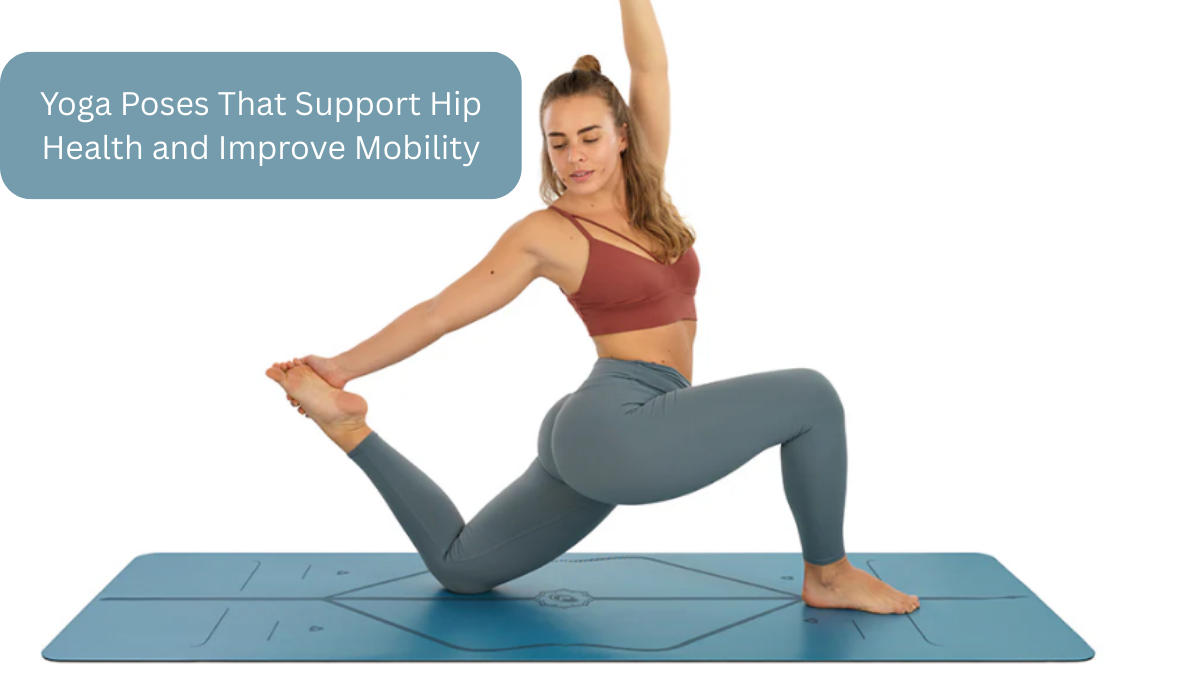
Yoga Poses That Support Hip Health and Improve Mobility
The hips are among the most important and complex joints in the human body. They support body weight, enable walking, running, sitting, bending, and nearly every lower-body movement we perform.
Despite their importance, hip health is often neglected until stiffness, discomfort, or pain begins to interfere with daily life. Modern lifestyles that involve long hours of sitting, limited physical activity, repetitive movements, and poor posture contribute significantly to reduced hip mobility and joint dysfunction.
Yoga provides a holistic, low-impact, and sustainable approach to maintaining healthy hips. Through a combination of controlled movement, stretching, strengthening, and mindful breathing, yoga improves joint mobility, muscular balance, and functional stability.
This article explores the importance of hip health, explains how yoga supports mobility and joint function, and presents a detailed guide to yoga poses that strengthen and open the hips safely and effectively.
Understanding Hip Health and Mobility
The hip is a ball-and-socket joint formed by the femur (thigh bone) and the pelvis. It is designed for stability and wide-ranging movement, including flexion, extension, internal rotation, external rotation, abduction, and adduction. Proper hip function depends on the balanced interaction of muscles, ligaments, tendons, and joint structures.
When the hips lose mobility or strength, the body compensates by shifting stress to other areas such as the knees, lower back, pelvis, and ankles. This compensation often leads to chronic pain, poor posture, limited movement capacity, and a higher risk of injury.
Hip mobility is not simply flexibility. It is the ability of the joint to move freely and safely through its full range of motion with control. Yoga improves both flexibility and mobility by stretching tight muscles and strengthening stabilizing muscles around the joint.
How Yoga Supports Hip Health

Yoga benefits the hips in multiple ways:
- It increases joint lubrication and circulation, which supports cartilage health and reduces stiffness.
- It improves muscular balance by strengthening weak muscles and relaxing overactive muscles.
- It enhances neuromuscular control, improving coordination and movement efficiency.
- It reduces stress and muscular tension, which often accumulate in the hips and pelvis.
- It promotes long-term joint stability through controlled, functional movement.
Unlike aggressive stretching or high-impact exercise, yoga emphasizes alignment, breath control, and mindful movement, making it especially suitable for long-term joint health.
Essential Yoga Poses for Hip Health and Mobility
Child’s Pose (Balasana)
Child’s Pose provides gentle decompression of the hips and spine while stretching the glute muscles and lower back. It is ideal for releasing tension and calming the nervous system.
To practice, kneel on the mat, bring the big toes together, and widen the knees. Sit the hips back toward the heels and extend the arms forward. Rest the forehead on the mat or a cushion. Breathe deeply and allow the hips to relax downward. Hold for one to three minutes.
This pose improves hip flexibility without placing strain on the joint.
Butterfly Pose (Baddha Konasana)
Butterfly Pose targets the inner thighs and groin, which play a major role in hip stability and mobility.
Sit upright with legs extended, bend the knees, and bring the soles of the feet together. Hold the feet with the hands and sit tall through the spine. Allow the knees to gently move toward the floor without forcing them. Maintain steady breathing and hold for one to two minutes.
This pose improves hip rotation and pelvic flexibility.
Pigeon Pose (Eka Pada Rajakapotasana)
Pigeon Pose is a deep hip opener that stretches the glute muscles, piriformis, and external rotators of the hip.
From a forward fold or downward-facing dog position, bring one knee forward and place it near the wrist while extending the opposite leg behind. Square the hips and slowly fold forward over the front leg. Hold the posture for one to three minutes before switching sides.
This pose is highly effective for releasing deep hip tension but should be performed carefully to protect the knees and lower back.
Lizard Pose (Utthan Pristhasana)
Lizard Pose deeply opens the hip flexors and strengthens stabilizing muscles around the hips.
From a lunge position, step the front foot outside the hand and lower the back knee to the mat. Keep the chest lifted or lower the forearms to the mat for a deeper stretch. Maintain steady breathing and hold for one to two minutes per side.
This pose improves both hip flexibility and functional mobility.
Warrior II (Virabhadrasana II)
Warrior II strengthens the hips while improving joint alignment and muscular coordination.
Stand with feet wide apart, turn one foot outward and bend the front knee. Extend the arms parallel to the floor and gaze forward. Maintain the posture for thirty to sixty seconds before switching sides.
This pose builds strength in the hip abductors and stabilizers, improving balance and endurance.
Half Happy Baby (Ardha Ananda Balasana)
This gentle pose opens the hips and groin while relaxing the lower back.
Lie on your back, bend one knee toward the chest, and hold the outer edge of the foot with the same-side hand. Gently draw the knee downward while keeping the opposite leg relaxed. Hold for thirty to sixty seconds per side.
This pose is safe, accessible, and effective for improving hip flexibility.
Garland Pose (Malasana)
Garland Pose is a deep squat that improves hip opening, ankle mobility, and pelvic flexibility.
Stand with feet wider than hips, bend the knees, and lower the hips into a squat. Bring the palms together at the chest and press the elbows into the inner knees to open the hips. Hold for thirty to sixty seconds.
This pose improves functional mobility for daily movements like sitting and lifting.
Bridge Pose (Setu Bandha Sarvangasana)
Bridge Pose strengthens the glutes and hamstrings while opening the hip flexors.
Lie on your back with knees bent and feet flat on the mat. Press into the feet and lift the hips upward. Keep the chest open and engage the core. Hold for thirty to sixty seconds.
This pose supports hip stability and spinal alignment.
Sample Hip Mobility Yoga Sequence
This sequence can be practiced three to five times per week:
- Warm-up with Cat-Cow and gentle hip circles
- Child’s Pose
- Butterfly Pose
- Lizard Pose (both sides)
- Pigeon Pose (both sides)
- Warrior II flow
- Garland Pose
- Bridge Pose
- Supine relaxation and breathing
This balanced routine supports flexibility, strength, and joint health.
Safety and Practice Guidelines
- Never force a stretch or push into pain.
- Use yoga props to support alignment and comfort.
- Move slowly and mindfully.
- Focus on breath control.
- Modify poses if discomfort arises.
- Consult a healthcare professional for existing injuries or joint conditions.
Frequently Asked Questions (FAQ)
How often should yoga be practiced for hip mobility?
Three to five times per week is ideal, but even short daily sessions can produce noticeable improvements.
Can yoga reduce hip pain?
Yes. When practiced correctly, yoga can relieve muscular tension, improve joint function, and reduce pain. Medical guidance is recommended for injury-related pain.
What is the difference between hip flexibility and hip mobility?
Flexibility refers to muscle length, while mobility refers to controlled joint movement through range of motion. Yoga improves both.
Is discomfort normal during hip stretches?
Mild stretching sensation is normal, but sharp pain is not. Pain indicates the need to modify or stop the pose.
Are these poses safe for beginners?
Yes. Most poses can be modified using props and support, making them suitable for beginners.
Can yoga replace physical therapy?
Yoga is supportive but not a replacement for medical treatment. Physical therapy is necessary for rehabilitation and injury recovery.
Can tight hips cause lower back pain?
Yes. Limited hip mobility often shifts stress to the lower back, leading to pain and dysfunction.
How long does it take to improve hip mobility?
Most people notice changes within two to four weeks of consistent practice.
Is yoga safe for older adults with stiff hips?
Yes, with proper modifications and gentle progression.
Should yoga be done before or after workouts?
Both. Gentle mobility before exercise and deeper stretching after workouts provide optimal benefits.
Conclusion
Healthy hips are essential for comfortable movement, posture, balance, and long-term physical independence. Yoga offers a safe, effective, and sustainable method for improving hip mobility, strengthening joint support structures, and reducing stiffness and pain.
Through consistent practice, mindful movement, and proper alignment, yoga not only improves hip health but enhances overall physical well-being and quality of life.