


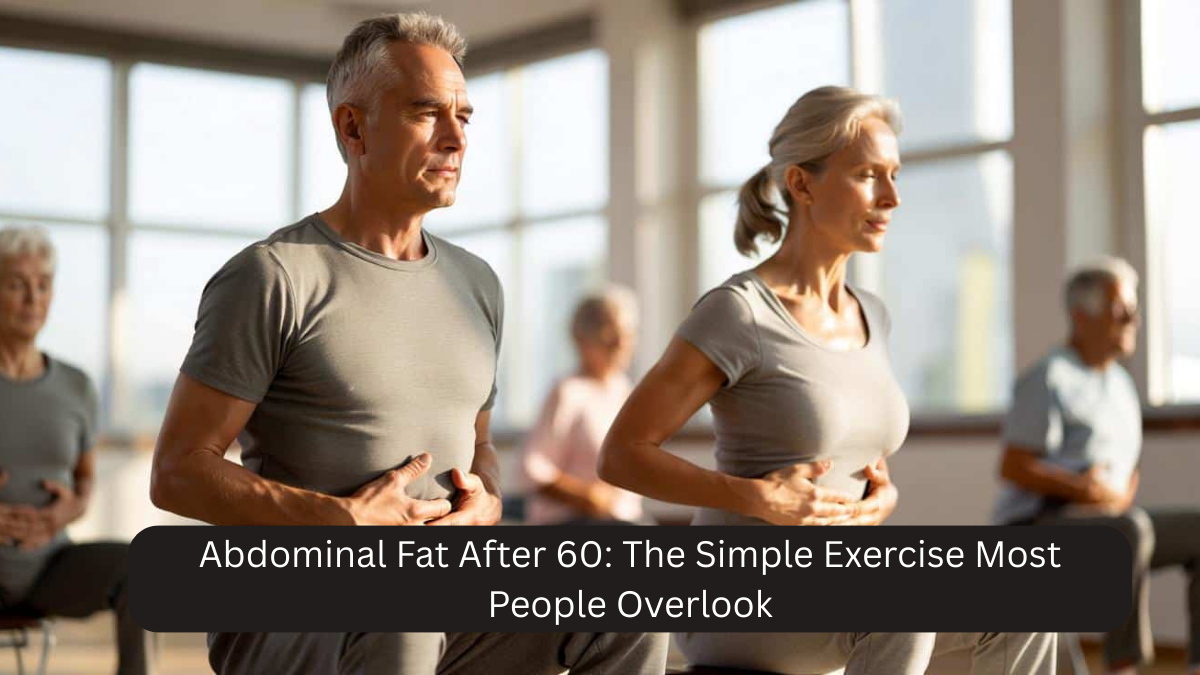
Abdominal fat becomes one of the most frustrating and persistent health challenges after the age of 60. Many people find that even with dieting, walking, and staying active, belly fat becomes harder to lose than at any other stage of life. Clothes fit differently, energy levels drop, posture changes, and health risks increase.
This is not simply a matter of willpower or effort. Aging changes the body’s biology, metabolism, hormones, muscle mass, insulin sensitivity, and fat storage patterns. The body becomes more efficient at storing fat and less efficient at burning it—especially around the abdomen.


While many people focus on cardio, dieting, and intense workouts, there is one simple, overlooked exercise that plays a critical role in reducing abdominal fat after 60:
Gentle core activation through deep abdominal breathing and postural muscle engagement
Specifically, the most overlooked “exercise” is:
Diaphragmatic Breathing with Core Engagement

This simple daily practice activates the deep core muscles, improves metabolism, supports posture, reduces cortisol (stress hormone), improves insulin sensitivity, and directly targets visceral fat storage patterns—without strain on joints or the spine.
Why Belly Fat Increases After 60
Abdominal fat after 60 is influenced by multiple biological changes:
1. Muscle Loss (Sarcopenia)
Aging reduces muscle mass, which lowers resting metabolic rate and fat-burning capacity.
2. Hormonal Changes

Declining estrogen, testosterone, and growth hormone increase fat storage, especially in the abdomen.
3. Insulin Resistance
Blood sugar regulation becomes less efficient, promoting fat storage.
4. Stress Hormones (Cortisol)
Chronic stress increases abdominal fat storage.
5. Reduced Physical Activity
Less movement means less calorie expenditure.
6. Postural Changes
Poor posture weakens core muscles, allowing abdominal fat to protrude.
7. Slower Metabolism
The body burns fewer calories at rest.
Why Most Exercise Programs Fail After 60
Many fitness programs focus on:
- High-impact cardio
- Intense HIIT
- Aggressive core workouts
- Long workouts
- High fatigue routines
These often cause:
- Joint pain
- Fatigue
- Injury risk
- Burnout
- Hormonal stress
- Poor consistency
What the aging body actually needs is activation, not exhaustion.
The Overlooked Exercise: Diaphragmatic Core Breathing
This is not just breathing—it is functional deep core training.
It activates:
- Transverse abdominis (deep core muscle)
- Diaphragm
- Pelvic floor
- Postural muscles
- Stabilizing muscles
- Nervous system regulation
These muscles form the body’s natural abdominal corset.
How to Perform It Properly
Step-by-Step Method
- Sit or lie comfortably
- Place one hand on chest, one on belly
- Inhale deeply through the nose
- Expand the belly, not the chest
- Exhale slowly through the mouth
- Gently pull the belly inward toward the spine
- Engage deep core muscles
- Maintain relaxed shoulders
- Repeat for 5–10 minutes
Why This Works for Abdominal Fat
1. Activates Deep Core Muscles
Strengthens the transverse abdominis, flattening the abdomen naturally.
2. Improves Posture
Better posture reduces belly protrusion.
3. Reduces Cortisol
Lower stress hormone levels reduce fat storage.
4. Improves Insulin Sensitivity
Better glucose regulation reduces fat accumulation.
5. Improves Circulation
Better oxygenation improves fat metabolism.
6. Supports Organ Health
Reduces visceral fat pressure on organs.
7. Improves Digestive Function
Better digestion reduces bloating and inflammation.
Supporting Simple Exercises (Optional Add-ons)
To enhance results:
Pelvic Tilts
Strengthen lower core
Standing Core Bracing
Engage core during daily activities
Gentle Walking
Improves circulation
Wall Plank
Safe core activation
Seated Marching
Strengthens lower abs safely
Daily 10-Minute Routine
- Diaphragmatic breathing – 5 minutes
- Standing core engagement – 2 minutes
- Gentle walking – 3 minutes
This is sustainable, safe, and effective.
Lifestyle Factors That Support Belly Fat Loss After 60
- Adequate protein intake
- Resistance training
- Stress management
- Sleep quality
- Hydration
- Anti-inflammatory nutrition
- Daily movement
- Posture awareness
- Blood sugar stability
Why This Approach Works Better Than Intense Exercise
Because it:
- Protects joints
- Supports hormones
- Reduces inflammation
- Improves metabolism
- Builds functional strength
- Improves consistency
- Reduces injury risk
- Enhances recovery
- Supports longevity
Health Benefits Beyond Fat Loss
- Improved balance
- Better posture
- Reduced back pain
- Better breathing
- Improved digestion
- Better sleep
- Reduced anxiety
- Improved circulation
- Better energy levels
- Reduced fall risk
Safety Guidelines
- Breathe slowly
- Do not strain
- Avoid breath-holding
- Stay relaxed
- Stop if dizzy
- Practice daily
- Combine with gentle movement
- Consult doctor if respiratory issues exist
Frequently Asked Questions (FAQ)
Can breathing really reduce belly fat?
Yes. It targets deep core muscles and hormonal pathways linked to abdominal fat storage.
Is this better than sit-ups?
Yes. Sit-ups strain the spine and do not activate deep core muscles effectively.
How long before results appear?
Postural and core changes appear in 2–4 weeks with daily practice.
Is it safe for seniors?
Yes, it is one of the safest exercises for older adults.
Can this flatten the belly?
Yes, by strengthening deep abdominal muscles and improving posture.
Does stress really affect belly fat?
Yes. Cortisol directly increases abdominal fat storage.
Do I still need cardio?
Walking and light activity are beneficial, but not excessive intensity.
Can this help back pain?
Yes. Deep core strength stabilizes the spine.
Can I do this seated?
Yes, it works seated, lying, or standing.
Is it good for digestion?
Yes. It improves gut motility and circulation.
Conclusion
Abdominal fat after 60 is not a failure of effort—it is a result of biological changes in the body. Fighting it with extreme workouts often makes things worse, not better.
The most overlooked exercise is not intense cardio or aggressive core training. It is deep diaphragmatic breathing with core engagement—a simple, safe, powerful daily practice that restores posture, strengthens the deep core, improves metabolism, reduces stress hormones, and targets the root causes of belly fat accumulation.
Sometimes the most powerful solutions are the simplest ones.
Not louder.
Not harder.
Not more exhausting.
Just smarter.
And consistency beats intensity—especially after 60.