


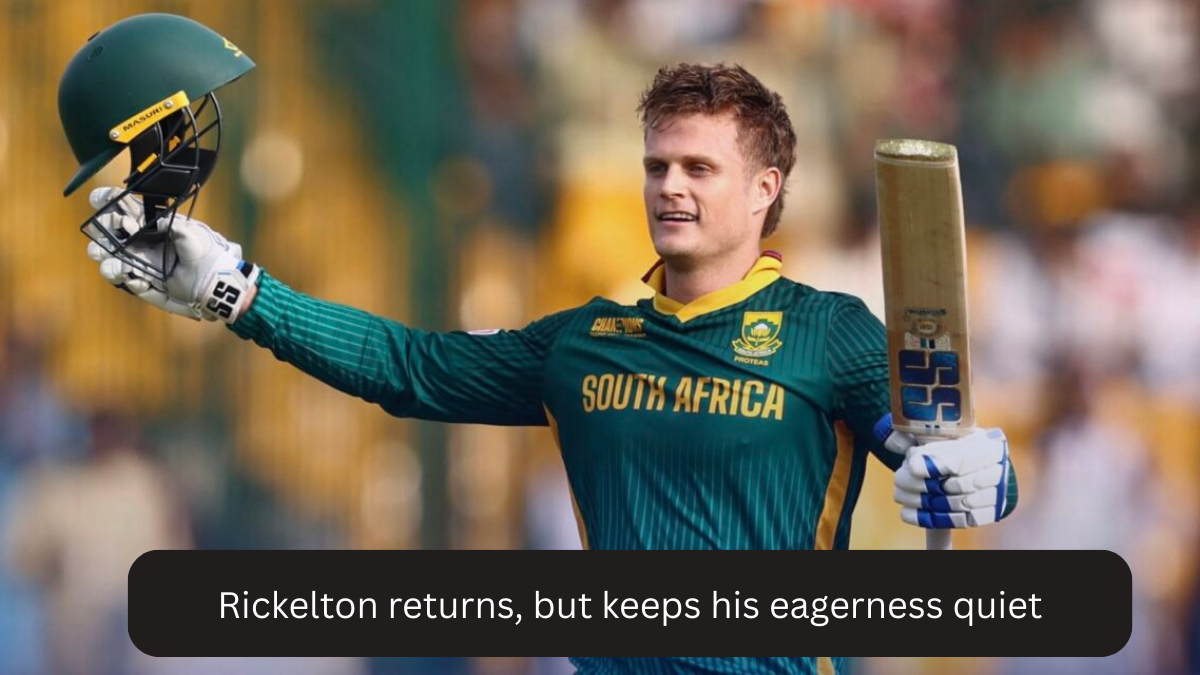
There is something powerful about a comeback that doesn’t need noise. When Ryan Rickelton walked back into competitive cricket, there were no dramatic statements, no emotional interviews, and no public declarations of intent. Just quiet focus, calm presence, and a bat in hand.
For many players, a return after absence is filled with visible excitement. For Rickelton, it was different. His comeback carried a sense of composure — a controlled readiness rather than raw emotion. The eagerness was there, but it was internal, disciplined, and measured.


This return wasn’t about proving a point.
It was about resuming responsibility.
A Return Built on Patience, Not Pressure
Rickelton’s journey back into the side has not been rushed. Time away from top-level competition can either sharpen hunger or create pressure. In his case, it appears to have created clarity.
Instead of forcing his return with aggressive statements or dramatic expectations, Rickelton focused on preparation:
- Training quietly
- Working on technical consistency
- Building fitness
- Refining mental discipline
- Strengthening match awareness

The result is a player who looks ready — not rushed.
Quiet Confidence Over Public Emotion
What stands out most about Rickelton’s return is not just his presence, but his demeanor.
There’s no visible desperation to perform.
No anxiety to impress.
No urgency to dominate headlines.

Instead, there is:
- Calm body language
- Controlled movement
- Simple shot selection
- Balanced footwork
- Patient decision-making
This kind of composure often reflects a player who understands the long game — not just in cricket, but in career building.
Mental Maturity in Competitive Sport
Comebacks are psychological battles as much as physical ones. Many players struggle with self-expectation after time away:
- Fear of failure
- Pressure to prove worth
- Anxiety about form
- External criticism
- Selection insecurity
Rickelton’s approach suggests a different mindset — one based on internal control rather than external validation.
By keeping his eagerness quiet, he removes pressure from himself and shifts focus onto execution.
That mental maturity can often be more valuable than raw talent.
Technique Over Tempo
Early signs from his return indicate a player prioritizing structure over speed.
Instead of chasing impact, Rickelton is focusing on:
- Shot selection
- Timing
- Balance
- Placement
- Reading the field
- Strike rotation
This technical discipline shows an understanding that form is built through consistency, not aggression alone.
Team Value Beyond Runs
A calm return doesn’t just benefit Rickelton — it benefits the team.
His presence brings:
- Stability at the crease
- Reduced pressure on partners
- Composed partnerships
- Tactical flexibility
- Psychological balance in batting order
Players who return quietly often become anchors rather than disruptors.
Why Silence Can Be Strength
In modern sport, noise is constant:
- Social media
- Public opinion
- Media pressure
- Fan expectations
- Online criticism
Choosing silence is not weakness — it is focus.
Rickelton’s low-profile return shows an understanding that performance speaks louder than promotion.
Silence allows:
- Mental clarity
- Reduced distraction
- Better concentration
- Internal motivation
- Emotional control
The Discipline of Controlled Ambition
Eagerness is natural. Every athlete feels it.
The difference is how it is expressed.
Rickelton hasn’t suppressed ambition — he has disciplined it.
This creates:
- Smarter shot choices
- Better patience
- Fewer reckless decisions
- Higher consistency
- Longer innings potential
Controlled ambition often produces sustainable performance.
Experience Changes Perspective
Time away from the game often changes how players view success.
Instead of chasing moments, they chase process.
Instead of chasing attention, they chase execution.
Instead of chasing validation, they chase consistency.
Rickelton’s return reflects this shift — a player who understands that:
- Careers are marathons
- Form fluctuates
- Consistency builds legacy
- Discipline builds longevity
What His Return Signals for the Team
His comeback sends a quiet but powerful message:
- Readiness over hype
- Focus over noise
- Discipline over drama
- Preparation over promotion
This kind of return strengthens team culture and professionalism.
Looking Ahead
Rickelton’s true impact won’t be judged by one match or one performance. It will be measured through:
- Consistency
- Composure under pressure
- Role clarity
- Partnership building
- Adaptability
- Mental resilience
If his return continues in this calm, focused manner, it may prove more valuable than a dramatic comeback filled with headlines.
Conclusion
Rickelton’s return is not loud — and that’s what makes it powerful.
There is eagerness, but it is internal.
There is hunger, but it is controlled.
There is ambition, but it is disciplined.
There is confidence, but it is quiet.
In a sport where noise often defines narratives, Rickelton’s silence stands out.
Not every comeback needs drama.
Not every return needs headlines.
Not every performance needs hype.
Sometimes, the strongest statement a player can make is simply being ready — and letting the bat do the talking.