


Sun Salutation A, or Surya Namaskar A, is one of the most fundamental sequences in yoga. It’s a flowing series of poses designed to warm up the body, increase flexibility, and boost energy. For beginners, it’s an excellent way to build strength, improve posture, and create a mindful connection with your breath. Practicing this sequence regularly can also help reduce stress, enhance circulation, and prepare your body for more advanced yoga poses.
Benefits of Sun Salutation A
- Full-body warm-up: Engages the arms, shoulders, spine, hamstrings, and glutes.
- Improves flexibility: Stretches the back, legs, and chest.
- Strengthens muscles: Builds core, arm, and leg strength.
- Boosts energy and circulation: The sequence stimulates blood flow and awakens the body.
- Reduces stress: Coordinating breath with movement promotes mental clarity and calmness.
Sun Salutation A Sequence for Beginners
1. Mountain Pose (Tadasana)
Stand tall with feet together, arms at your sides. Ground through your feet, lengthen your spine, and relax your shoulders. Take a few deep breaths to center yourself.

2. Upward Salute (Urdhva Hastasana)
Inhale and sweep your arms overhead, palms facing each other. Slightly arch your back and lift your chest while keeping your legs strong and grounded.
3. Forward Fold (Uttanasana)
Exhale and hinge at your hips to fold forward. Let your head hang, and keep a slight bend in your knees if needed. Relax your neck and shoulders.
4. Halfway Lift (Ardha Uttanasana)
Inhale and lift your torso halfway up, placing your hands on your shins or thighs. Lengthen your spine, engage your core, and gaze forward.
5. Plank Pose
Step or jump back into a plank position with your wrists under your shoulders. Keep your body in a straight line from head to heels, engaging your core and glutes.
6. Chaturanga Dandasana (Low Plank)
Exhale and lower your body halfway down, keeping elbows close to your sides. Your shoulders should stay in line with your elbows, and your core remains engaged. Beginners can modify by lowering knees to the mat.
7. Upward-Facing Dog (Urdhva Mukha Svanasana)
Inhale, press through your hands, and lift your chest and legs off the floor. Keep your shoulders relaxed and open your chest. Alternatively, beginners can practice Cobra Pose with thighs on the floor.

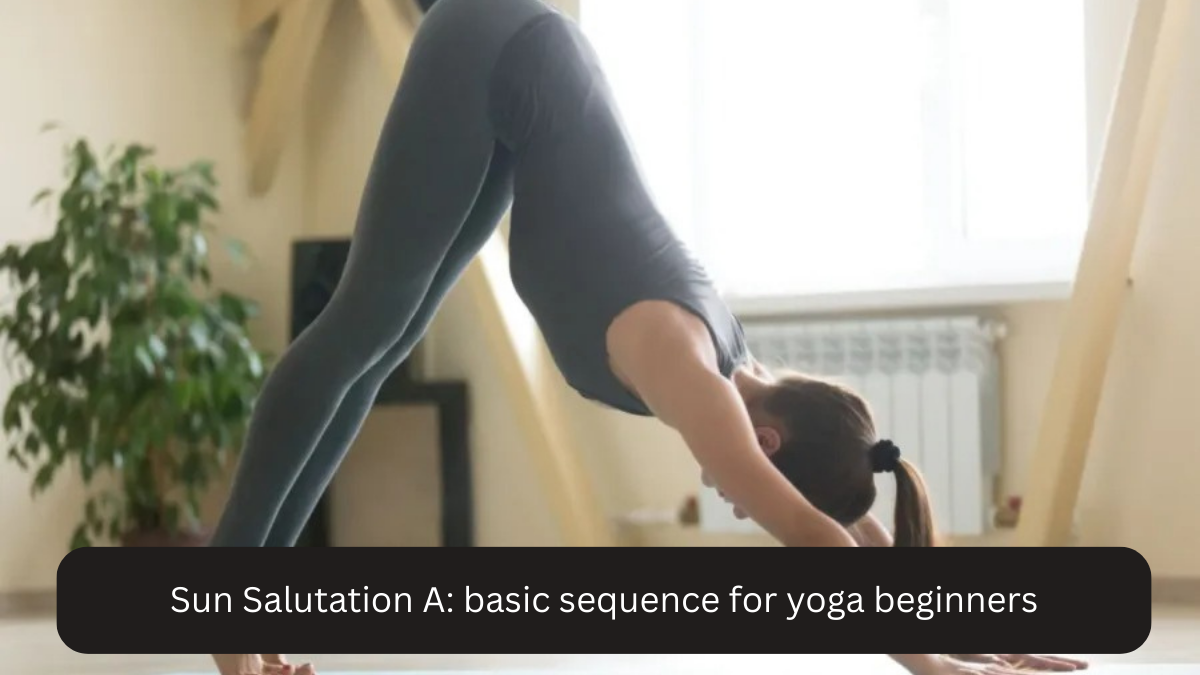
8. Downward-Facing Dog (Adho Mukha Svanasana)
Exhale and lift your hips toward the ceiling, forming an inverted “V” shape. Keep your hands shoulder-width apart and feet hip-width apart. Relax your head and lengthen your spine.
9. Forward Fold (Uttanasana)
Step or walk your feet forward and fold over your legs. Release tension in your neck and shoulders.
10. Upward Salute (Urdhva Hastasana)
Inhale, sweep your arms overhead, and gently arch your back.
11. Mountain Pose (Tadasana)
Exhale, lower your arms to your sides, and return to standing.
This completes one round of Sun Salutation A. Beginners can start with 3–5 rounds, gradually increasing as strength and endurance improve.
Tips for Beginners
- Focus on coordinating your breath with each movement: inhale as you lift, exhale as you fold.
- Keep your knees slightly bent in forward folds if hamstrings feel tight.
- Move slowly and mindfully to maintain alignment and prevent injury.
- Use a yoga mat for comfort and grip.
- Remember, consistency is more important than speed.
Frequently Asked Questions (FAQ)
1. How often should beginners practice Sun Salutation A?
Practicing 3–5 rounds daily or 4–5 times per week is ideal for building strength, flexibility, and energy.
2. Can I modify poses if they feel too difficult?
Yes. Beginners can bend knees in forward folds, lower knees in Chaturanga, or use blocks for support.
3. How long does it take to feel benefits?
With regular practice, increased flexibility and energy can be noticed in 2–4 weeks. Improved posture and muscle tone typically appear within 6–8 weeks.
4. Is Sun Salutation A a good warm-up for other yoga practices?
Absolutely. It warms up the body, stretches major muscle groups, and prepares you for more challenging yoga poses.
5. Can I practice Sun Salutation A if I have joint pain?
Yes, with modifications. Keep movements slow, avoid deep backbends if painful, and consult a healthcare professional if needed.