


Hip stiffness is one of the most common mobility problems in modern lifestyles. Long hours of sitting, limited movement variety, repetitive exercise routines, stress, and poor posture gradually reduce hip mobility and joint freedom. Over time, this stiffness can cause pain, restricted movement, lower back issues, poor posture, and reduced physical performance.
Many people believe that stretching harder and deeper is the solution. However, aggressive stretching often fails to solve hip stiffness and may even make it worse. Tight hips are not always caused by short muscles alone. They are often the result of weak stabilizing muscles, poor joint mechanics, nervous system tension, and restricted joint movement patterns.

Yoga works faster than traditional stretching because it focuses on joint mobility, muscular balance, breath control, and nervous system relaxation, rather than simply pulling on tight muscles. This integrated approach allows the hips to release stiffness naturally and safely, without forcing range of motion.
This article explains why yoga is more effective than stretching for stiff hips and presents a set of yoga poses that restore hip mobility faster, safer, and more sustainably.
Why Stretching Alone Fails to Fix Hip Stiffness
Traditional stretching focuses mainly on muscle lengthening. While flexibility is important, stiffness is often caused by deeper issues such as:
- Joint compression
- Poor hip mechanics
- Muscle imbalances
- Weak stabilizers
- Protective muscle tension
- Nervous system stress
- Poor movement patterns
When muscles feel threatened by forced stretching, the nervous system increases muscle guarding. This protective response makes stiffness worse, not better. The body responds by tightening instead of relaxing.
Yoga addresses stiffness at multiple levels:
- Joint movement and lubrication
- Muscle balance and activation
- Breath-driven relaxation
- Nervous system regulation
- Functional movement patterns
- Stability and mobility integration
This is why yoga often produces faster and longer-lasting results than static stretching alone.
How Yoga Releases Hip Stiffness Effectively
Yoga works through three core mechanisms:
Joint Mobility Restoration
Yoga moves the hip joint through controlled ranges of motion, improving lubrication and circulation inside the joint capsule.
Muscle Rebalancing
It strengthens weak muscles while releasing overactive ones, restoring natural movement patterns.
Nervous System Relaxation
Breath-based movement reduces protective muscle tension, allowing the hips to release safely.
This combination leads to faster improvement than stretching alone.
Yoga Poses That Break Hip Stiffness
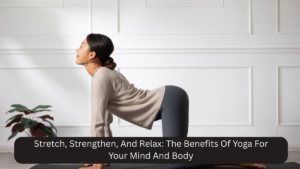
1. Cat-Cow Flow (Marjaryasana–Bitilasana)
This flowing movement improves pelvic mobility and hip-spine coordination.
Practice on hands and knees, moving between spinal flexion and extension while synchronizing with breath. Continue for one to two minutes.
This restores fluid movement in the pelvis and hips.
2. Low Lunge (Anjaneyasana)
This pose releases tight hip flexors and restores hip extension.
From kneeling, step one foot forward into a lunge. Lower the back knee and gently sink the hips forward while keeping the torso upright. Hold for one minute per side.
This pose reverses sitting posture stiffness.
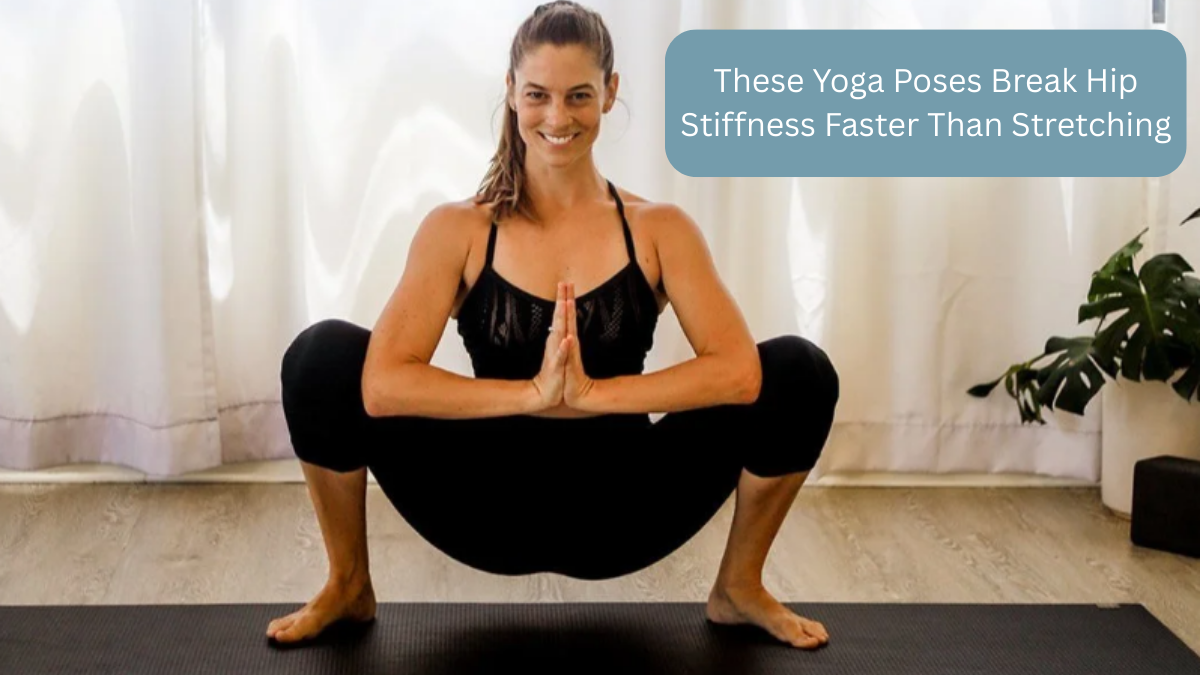
3. Supported Garland Pose (Malasana Variation)
A deep squat that restores natural hip function.
Stand with feet wider than hips, bend the knees, and lower into a squat. Place a block or cushion under the hips for support. Press elbows into inner knees to gently open hips.
This improves functional mobility and joint health.
4. Figure-Four Pose (Supine Version)
This releases deep glute and outer hip tension.
Lie on your back, cross one ankle over the opposite knee, and gently draw the bottom leg toward the chest. Hold for thirty to sixty seconds per side.
This releases deep hip stiffness safely.
5. Half Happy Baby (Ardha Ananda Balasana)
A gentle hip opener that improves joint mobility without strain.
Lie on your back, bend one knee, hold the outer edge of the foot, and gently draw the knee downward. Hold for thirty to sixty seconds per side.
This improves hip flexibility and relaxation.
6. Bridge Pose (Setu Bandha Sarvangasana)
This strengthens glutes while opening hip flexors.
Lie on your back with knees bent and feet grounded. Lift hips upward while engaging glutes and core. Hold for thirty to sixty seconds.
This restores hip stability and mobility.
7. Lizard Pose (Utthan Pristhasana)
A deep hip flexor and joint mobility pose.
From a lunge, step the front foot outside the hand and lower the back knee. Hold for one to two minutes per side.
This improves joint range and muscle balance.
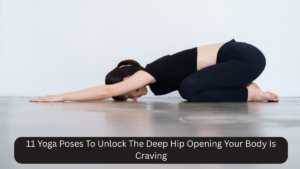
8. Child’s Pose (Balasana)
A gentle decompression pose for hips and spine.
Kneel, widen knees, sit hips back toward heels, and rest forward. Hold for one to three minutes.
This releases tension and calms the nervous system.
9. Warrior II (Virabhadrasana II)
This builds strength and stability in the hips.
Stand wide, bend the front knee, extend arms, and hold for thirty to sixty seconds per side.
This strengthens hip stabilizers and improves joint alignment.
10. Side-Lying Hip Circles
Lie on one side and gently move the top leg in slow circles. Perform controlled repetitions.
This restores hip joint mobility through active movement rather than passive stretching.
Why These Poses Work Faster Than Stretching
These poses:
- Improve joint lubrication
- Reduce nervous system tension
- Activate stabilizing muscles
- Restore functional movement
- Balance flexibility with strength
- Improve circulation
- Release protective muscle guarding
This leads to faster, safer, and longer-lasting hip mobility.
Safe Practice Principles
Move slowly and with control
Never push into pain
Use support when needed
Focus on breathing
Progress gradually
Maintain proper alignment
Stop if sharp discomfort occurs
Frequently Asked Questions (FAQ)
Why do my hips feel stiff even if I stretch regularly?
Because stiffness is often caused by joint restriction, muscle imbalance, and nervous system tension, not just muscle tightness.
Is yoga better than stretching for hip mobility?
Yes. Yoga improves joint health, muscle balance, and nervous system regulation, making it more effective than stretching alone.
How often should I practice for stiff hips?
Three to five times per week produces noticeable results. Daily gentle movement works even faster.
Can yoga help hip pain?
Yes, when practiced correctly, yoga can reduce pain by improving joint mechanics and muscle balance.
How fast will I feel results?
Most people feel improvement within one to two weeks of consistent practice.
Is this safe for beginners?
Yes. All poses can be modified and practiced gently.
Should I stretch before or after yoga?
Yoga itself provides mobility. Additional stretching is optional and should be gentle.
Can tight hips affect my back and knees?
Yes. Hip stiffness often transfers stress to the lower back and knees.
Is pain normal during hip opening?
No. Discomfort should be mild and controlled, never sharp.
Can yoga prevent hip stiffness long-term?
Yes. Regular yoga maintains joint health, movement quality, and muscular balance.
Conclusion
Hip stiffness cannot be solved by forceful stretching alone. True mobility comes from restoring joint movement, muscle balance, nervous system relaxation, and functional strength. Yoga achieves this through controlled movement, breath, and mindful practice.
These yoga poses break hip stiffness faster than stretching because they address the real causes of restriction, not just the symptoms. With consistent practice, they improve mobility, reduce pain, enhance posture, and restore natural movement patterns that support long-term hip health and overall physical well-being.